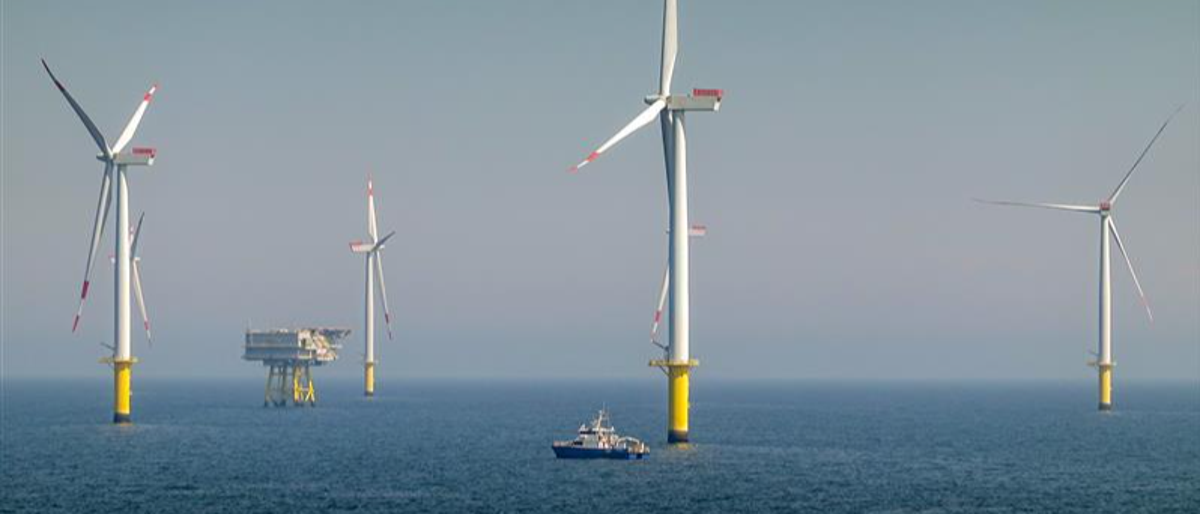
The Unseen Challenges of Offshore Power
Offshore wind farms are typically connected to land via extensive submarine AC export cables, which can stretch over 100 km. These cables exhibit high capacitance, and could remain substantially charged, potentially leading to electrical discharge currents that can exceed 1000 A. To manage reactive power, fixed or variable shunt reactors are commonly integrated at one or both ends of the cable. The interplay between this inherent cable capacitance and the inductance of shunt reactors profoundly influences the performance of conventional relay protection IEDs.
Several factors compound these protection complexities:
- High cable capacitance and charging currents: The high capacitance of long export cables generates high capacitive charging currents, which can desensitize traditional line differential protection (87L) functions.
- Non-linear wind turbine generator (WTG) fault response: Modern WTGs, predominantly Type IV machines, utilize full converter-based technology. Unlike conventional synchronous generators, these inverter-based sources exhibit highly non-linear source impedance and limit fault current contributions to typically 1.1-1.3 p.u or less. This controlled fault current injection results in dynamic variations in sequence component voltage and current angles, posing challenges for directional protection elements.
- Ringing-down phenomenon: The resonant interaction between cable capacitance and shunt reactor inductance during circuit breaker operations creates transient oscillations. These "ringing-down" transients can lead to unintentional tripping of protection relays, particularly during cable de-energization.
- Inhomogeneous cable sequence impedance: Export cables often comprise multiple sections with varying designs, cross-sections, and bonding methods, resulting in non-uniform sequence impedance along their length. This inhomogeneity affects both accurate impedance measurements for distance protection and charging current compensation methods for differential protection.
- Transformer connection and grounding: The connection group and grounding configurations of power transformers at the cable ends impact zero-sequence impedance and fault current distribution, potentially lowering short-circuit current levels.
- Variable short-circuit contribution from the grid: Both strong and weak grid conditions influence the response of protection functions and the infeed ratio between the grid and the wind farm, affecting sensitivity and coordination.
Traditional protection schemes, such as classic line differential protection, often require high minimum differential current settings (up to 150 percent) for complex systems due to inherent assumptions, thereby reducing sensitivity. Furthermore, Charging Current Compensation (CCC) functions, while intended to address high charging currents, can be challenging to apply and may lead to maloperation, especially in complex export cable systems. Distance protection schemes also face difficulties with large cable capacitance, ringing-down phenomena, and the atypical fault response from WTG converters.
Adaptive Protection: A Breakthrough in Line Differential Protection
Hitachi Energy's Adaptive Model-Based Line Differential Protection, integrated into the Relion RED670 IED, represents a significant leap forward in power system protection. This innovative solution is rooted in a fundamentally different approach: the creation of a digital replica of power system components through complex non-linear mathematical models. This enables more secure and sensitive protection by reducing assumptions about the transient behaviors of complex configurations during disturbances.
The principles behind: The core of this innovation lies in its ability to model the complex, non-linear behavior of power system components when connected in intricate configurations. The system incorporates detailed information about each component within the protected object, such as various cable sections with differing parameters and fixed or variable shunt reactors. These elements are precisely represented using sequence matrices, forming a comprehensive dynamic model of the entire export cable system.
This dynamic mathematical model, coupled with local current and voltage measurements, enables the system to accurately estimate the expected remote-end phase currents that would flow out of a healthy export cable. This capability is crucial for precise charging current compensation when comparing these estimated values with the actual phase currents received from the remote IED via a high-speed communication link (2Mbits/sec). The result is a highly sensitive and secure model-based differential protection that operates effectively regardless of the export cable's properties.
Key advantages:
- Enhanced sensitivity and safety: Unlike classic line differential protection, which often requires a high minimum differential current setting (up to 150 percent) for complex systems, the model-based approach significantly increases sensitivity and safety. This is demonstrated through differential current pickup settings as low as 25-75 percent in the model-based approach, compared to 150 percent in classic systems.
- Superior Charging Current Compensation: The model-based approach inherently provides precise charging current compensation, leading to negligible differential current before a fault, even with high charging currents. This contrasts with the classic 87L, where the charging current significantly influences the pre-fault differential current.
- Robustness to ringing-down phenomenon: The model-based 87L function effectively handles the ringing-down phenomenon, quickly recognizing that differential currents are practically zero despite high charging currents during energization, preventing spurious tripping.
- Adaptive to WTG characteristics: The solution enhances stability against variations in source impedance from the wind farm side by utilizing zero-sequence-based criteria, which are more suitable for ground faults (the most common failure mode for ECs).
- Designed for complex configurations: This protection is specifically designed for complex line configurations, including long cables with reactors, series compensated lines, and mixed line configurations.
Co-Creating the Future: Our R&D Journey with Ørsted
A critical aspect of this development has been the close R&D collaboration with Ørsted, a global leader in offshore wind energy. Ørsted's invaluable insights and real-world operational data have been instrumental in validating the product's performance under various challenging conditions typical of offshore wind farms. This direct customer involvement in the innovation process ensures that the developed algorithms and functionalities precisely address the specific challenges faced by grid operators. The collaboration enabled rigorous testing and refinement, guaranteeing that the innovative Adaptive Model-Based Line Differential Protection technology provides tangible benefits in terms of enhanced fault detection and grid resilience.
The Bottom Line: Securing Revenue with Reliable Protection
For grid operators and offshore wind farm owners, the implications of this advanced protection solution are significant:
- Enhanced fault clearance and uptime: By providing more accurate and sensitive fault detection, the Adaptive Model-Based Line Differential Protection facilitates faster fault clearance times and limits damage to equipment. This directly translates to reduced downtime for offshore wind farms, enabling them to return to full power generation more quickly and maximize revenue generation.
- Increased grid resilience: The improved security and sensitivity of the protection scheme contribute to a more robust and reliable grid infrastructure. This minimizes the risk of cascading failures and widespread outages, ensuring a stable and consistent energy supply.
- Optimized asset performance: The ability to precisely model and manage complex line configurations allows for more efficient operation and utilization of expensive export cable assets.
- Reduced operational risks and associated costs, including reduced wear and tear on equipment.
Hitachi Energy is committed to pushing the boundaries of power system protection systems. The Adaptive Model-Based Line Differential Protection technology, with its sophisticated mathematical modeling and proven performance through validation with industry leaders like Ørsted, represents a paradigm shift. This innovation, set to be a key feature in the RED670 - an IEC 61850-certified transmission IED -, ensures enhanced protection security and sensitivity, and ultimately a more profitable future for offshore wind power transmission.