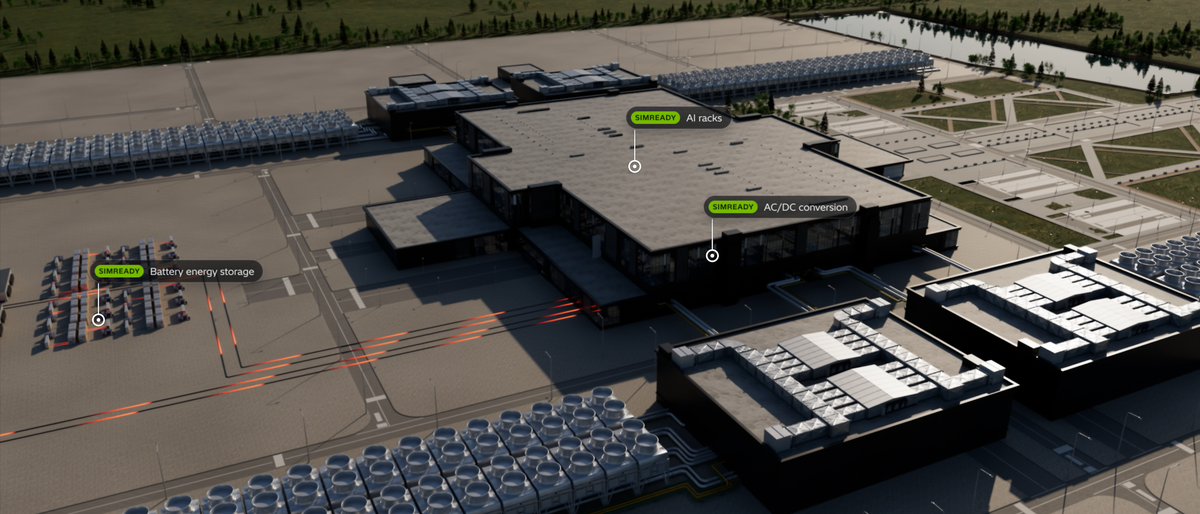
Power infrastructure is a critical factor in the speed and scale of AI factory deployment. Electricity demand from data centers increased by 17 percent1 in 2025, while consumption from AI-focused facilities grew even faster, significantly outpacing overall global electricity demand growth. As operators work to accelerate AI infrastructure deployment, they must make critical design decisions that impact the ability to deliver with speed, reliability, scalability, and long-term resilience.
Hitachi Energy's new simulation capability initially focuses on 800-volt direct current (VDC) architectures, which are being developed to support the growing power density and efficiency requirements of next-generation AI factories. As the industry explores 800 VDC as a new approach to power distribution, grid-to-rack simulation can help provide insights into system behavior and performance before deployment at scale.
Building on its close collaboration with NVIDIA for 800 VDC AI factories, the simulation enables teams to examine how different operating conditions, load profiles and resilience scenarios may affect grid-to-rack system performance before physical assets are adopted. Using OpenUSD-based workflows powered by NVIDIA Omniverse libraries, the shared environment allows engineering data and Hitachi Energy power system models to be evaluated together. The goal is to support comparison of design alternatives, validation of assumptions and more informed infrastructure decisions earlier in the planning process.