
From deep seas to devices: How advanced line differential protection unlocks offshore wind's full potential
Blog Post | 24.04.2026 | 6 min read | Claus Vetter
Blog Post | 24.04.2026 | 6 min read | Claus Vetter
Imagine simultaneously powering thousands of your home's most power-hungry appliances – say 300 refrigerators– all through a single, super-long extension cord. That immense electrical current, potentially a few thousand amperes, is precisely what flows from offshore wind farms to our homes via vast undersea cables.
Keeping the massive flow of clean energy stable and uninterrupted is a monumental task; to achieve this, novel technologies have become essential. For example, advanced line differential protection is critical for transmission lines: if the protective system detects a major, unexpected variation between the power flow conditions measured at both sides of a grid's section (such as two power line ends), it instantly shuts down the power to prevent serious damage and expensive blackouts.
However, since the technology was first introduced, detecting such differences in long high-voltage AC power cables has been tricky, due to their high capacitive currents. This involves not only large amounts of electrical charge flowing through the transmission lines but also the cable’s ability to store charge and induce rapid voltage and frequency changes.
Such complexity is why higher sensitivity becomes vital when it comes to protecting undersea cables, and human ingenuity provides the solution. By embedding an advanced mathematical model of the protected cable inside the control unit (Intelligent Electronic Device), the system's sensitivity is significantly improved even in the most difficult cable conditions, ensuring a reliable, sustainable, and cleaner power supply.
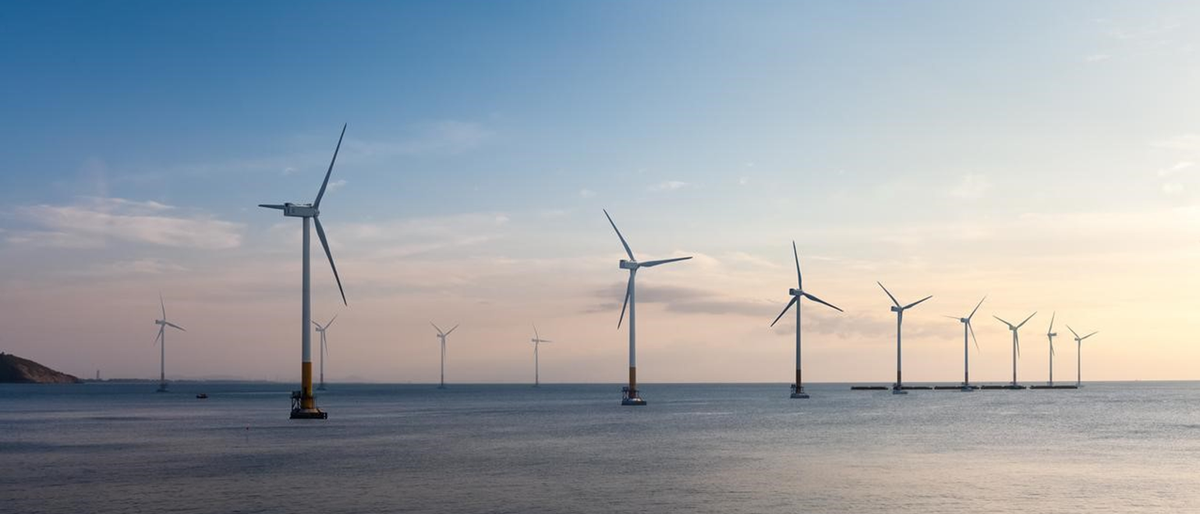
Offshore wind farms are key players in the global acceleration of clean energy. They harness powerful sea winds to generate electricity, reducing our reliance on fossil fuels and cutting harmful emissions, thus contributing to a sustainable energy future. Yet connecting these giants of clean energy to our homes isn't as simple as plugging in a lamp.
These undersea cables often stretch over 100 kilometers. The distance, combined with the immense power they carry, creates unique electrical quirks that traditional grid protection systems weren't designed for:
These hidden complexities often push grid operators into a tough situation: either make their protection systems less sensitive (and risk missing real problems) or accept more frequent, unnecessary power cuts; neither is good for delivering affordable, clean energy.
To address these complexities, new solutions like the Adaptive Model-Based Line Differential Protection have been developed. It is essentially an intelligent mathematical model of the entire undersea cable system.
At its core, this innovation applies complex mathematics to truly understand the electrical behavior of the cable. The formula – or matrix – considers every variable and variation, whether that's the different cable sections, the behavior of the shunt reactors, and even how things change when power demand shifts. Using this digital model, along with real-time electrical readings (currents and voltages) from both ends of the cable, the system can precisely predict what the electrical current should look like if everything is healthy.
This powerful prediction capability is key. By constantly comparing the predicted healthy current with the actual current it measures, the system can almost instantly detect any abnormal differences, which signal a real fault. This allows for incredibly accurate "charging current compensation," meaning the system won't get fooled by those large, normal charging currents.
Benefits you feel, not just see
This technology is a proven solution, not just a concept. Hitachi Energy and Ørsted partnered to conduct rigorous testing and validation using real-world data from operating offshore wind farms. This collaboration was crucial to ensure the technology truly addresses the practical needs of grid operators and helps bring clean energy to millions.
Advanced line protection is an example of how investing in innovative power grid technologies with digital at their core can create a more sustainable, secure, resilient, and affordable energy system. It ensures that the vital clean energy flowing from the deep seas reaches our homes and communities reliably, powering our daily lives and accelerating our progress to a sustainable energy system.
