
Electricity is no longer about energy. It’s a national security issue – Op-ed by Benedikt Franke & Andreas Schierenbeck in the Sunday Times
Features | 17.08.2026 | 6 min read
Features | 17.08.2026 | 6 min read
This text was originally published in The Sunday Times and also appears in the Munich Security Conference website.
What is being called the ‘age of electricity,’ means demand is outstripping supply. We must ensure our grids are robust enough to withstand geopolitical threats.
The recent clash over the Strait of Hormuz crisis underscored the profound structural vulnerabilities of the global hydrocarbon system.
With roughly 25 per cent of global seaborne oil supplies and a significant share of liquified natural gas (LNG) exports effectively trapped in the Persian Gulf, the world has been navigating one of the most severe energy supply shocks in history, triggering sharp price increases and heightening the risk of a broader economic downturn.
The aggressive re-weaponisation of energy, which Russia’s most recent assault against Ukraine has shone a spotlight upon, further reinforces that hydrocarbons like oil and gas remain both a source of geopolitical leverage and a vulnerability for energy security.
With many countries and regions moving to minimise their dependence on oil and gas imports, the focus on home-grown renewables and electricity grids is intensifying.
However, while a transition to clean energy production and consumption can help to reduce the geopolitical exposure associated with hydrocarbons, it introduces a new set of challenges that must be managed and opportunities far outweighing them.
We have entered what the International Energy Agency (IEA) terms the “age of electricity.” Power demand is rising faster than overall energy use and economic growth thanks to AI-driven data centres, increasing cooling demand and the growing electrification of buildings, transport and industry. By 2030, global electricity consumption is set to grow more than 3.5 per cent annually, with renewables and nuclear, providing half of the world’s power.
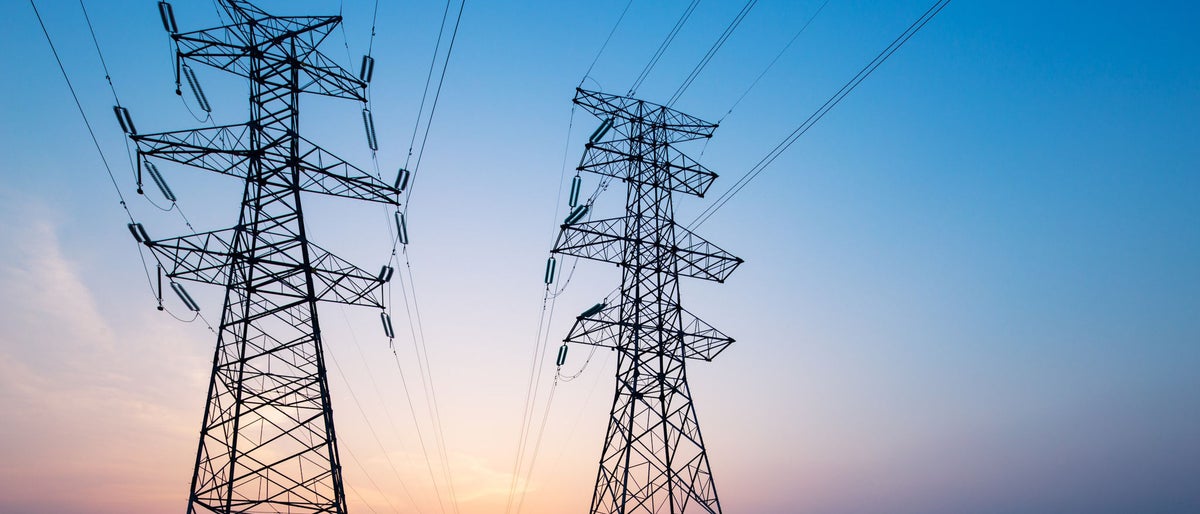
As electricity becomes the backbone of both the economy and society, it has also become the new frontline of energy security. And at the centre of this new frontline sits the power grid. Because electricity—unlike fossil fuels like gas or oil—cannot yet be stored or redirected at scale, the demand and supply of electricity need to be balanced in real time.
The power grid must integrate increasingly variable energy sources while delivering electricity where it is needed. A disruption at any point in the value chain, from generation, transmission and distribution to consumption, can trigger a power failure potentially leading to an immediate, economy‐wide shock.
That is why electricity is no longer just an energy issue—it’s a national security issue.
Three major external factors pose a risk to the power grids. The first is the fragility of global supply chains. Processing of critical materials is concentrated in a few regions and production of specialised components is struggling to keep up with demand, creating long lead times and bottlenecks for project developers. Recent disruptions have shown how quickly these supply chains can fracture.
A second vulnerability stems from the growing convergence of physical and cyber threats. As grids become increasingly digitalised, they are becoming more efficient but also expanding the potential attack surface.
Adversaries can combine physical sabotage with intrusions into control systems to disrupt power flows and essential services. Recent incidents, from the 2025 cyber-attack on Poland’s grid to the 2026 arson attack on Berlin’s cable bridges, show how even localised strikes can expose vulnerabilities capable of triggering far broader outages.
The third source of strain is the increasing impact of climate‐driven hazards. Extreme weather, prolonged droughts, wildfires, and floods are placing unprecedented pressure on infrastructure built for a more steady climate. In Britain, this has manifested in record temperatures during heatwaves this summer.
These external risks are intersecting with a range of internal pressures. Operationally, power grids are becoming notably more complex. Rapid renewable integration and less predictable demand are making system stability harder to maintain. What was once a comparatively simple, centralised system has evolved into a far more complex and interconnected one, leaving operators with much less room for error, and spoilers with more opportunities for disruption.
As internal complexity grows and external pressures intensify, stable, resilient, and flexible power grids become one critical link holding the energy system together. Grids connect regions, integrate more variable supply and less predictable demand and provide the resilience needed to absorb and withstand shocks.
It is thus no surprise that power grids played a major role at this year’s Munich Security Conference. Policymakers and industry leaders agreed on a clear set of priority actions to enhance power grid security that should not be deferred any longer. At the forefront, planning has emerged as a critical enabler—an urgency also underscored by the G20’s Global Coalition on Energy Planning.
Grid planning must evolve to be more holistic, integrated and coordinated, a significant departure from today’s reactive approach to infrastructure development.
It is also now clear that the technologies exist to meet our energy and climate goals out to 2035 and beyond. Deploying these technologies at speed and scale by creating enabling environments that speed up permitting and reward innovative business models is essential.
Other priorities include the need for countries to actively invest in the workforce and institutional capability needed to plan, build, and operate tomorrow’s power systems; to create agile and resilient supply chains for both technical components and critical materials; as well as to build strategic reserves of critical technologies and critical materials.
Digitalisation must be accelerated, including a focus on improved situational awareness among stakeholders, while simultaneously managing cyber security risks.
In the electricity era, power grids have become the foundations on which our economies, our societies, and our security depends.
The countries that recognise this, and act accordingly, will not only shield their citizens from shocks but will anchor their competitiveness in a world where electricity security has become indistinguishable from national security.
Those that hesitate will discover that the cost of inaction is measured not in kilowatt hours but in lost industries, weaker economies, and diminished strategic autonomy. The lesson is clear: electricity security built on resilient and reliable grids can deliver energy security and, ultimately, national security, and security will be defined by who can keep electricity systems running under pressure.

Dr. Benedikt Franke is Vice-Chair and CEO at the Munich Security Conference (MSC) and
Andreas Schierenbeck is Chief Executive Officer of Hitachi Energy