
Grid forming technology
As energy demand shifts, grid stability challenges increase
The transition to a decarbonized power grid is rapidly increasing the need for grid forming technology. As synchronous fossil fuel-based generators retire and penetration of inverter-based renewable sources increases, the power system loses traditional sources of inertia, voltage stability, and frequency support. At the same time, electrification of energy-intensive industries like transport and heating places additional strain on grid stability.
These shifts introduce major operational challenges: reduced inertia leads to more exaggerated frequency deviations, reduced short-circuit strength causes rapid voltage fluctuations, and intermittent renewable production complicates balancing supply and demand. Ensuring stable synchronization of many distributed inverter-based resources becomes more difficult, particularly as overall grid strength declines.
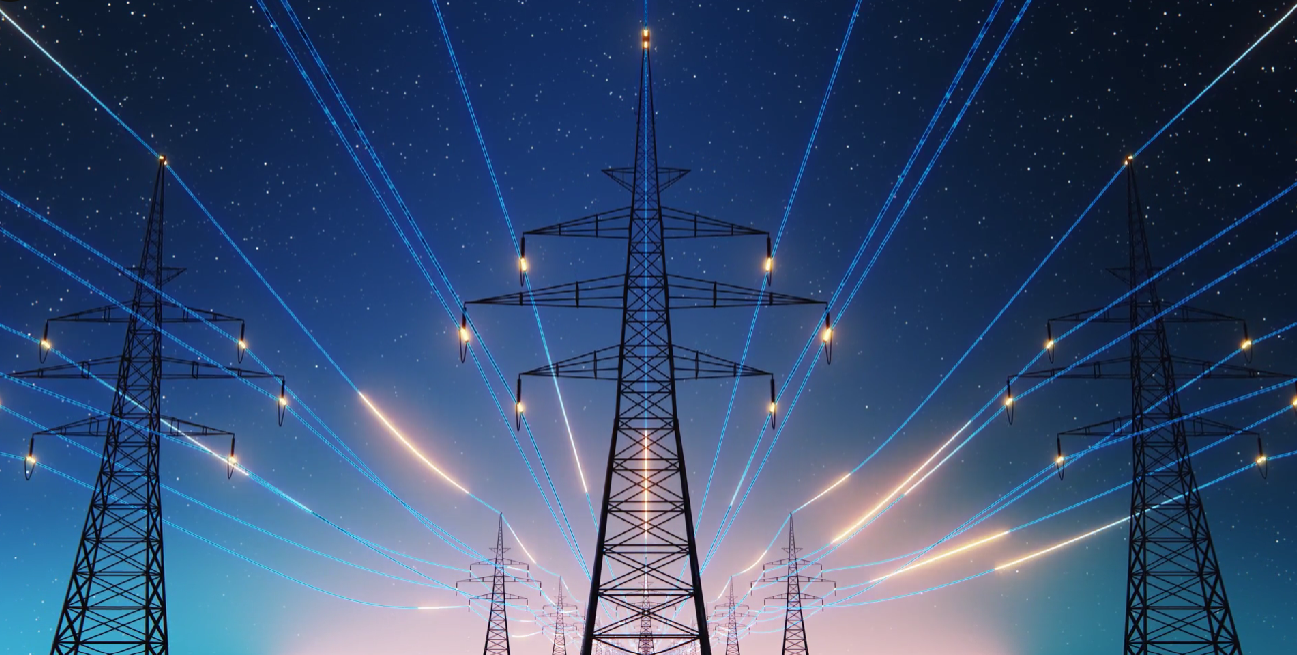
Ensuring grid resilience with Grid forming inverters
Grid forming technology addresses these issues by enabling converters to behave like voltage sources that naturally support system stability. They can provide fast frequency response, voltage regulation, and robust synchronization—capabilities that are essential in low‑inertia, renewable‑dominated grids. Hitachi Energy has developed grid‑forming functionality as a key feature of its Grid-enSure® portfolio, which consists of HVDC, medium voltage direct current (MVDC), STATCOM, Enhanced STATCOM, Static Frequency Converters (SFC), and Battery Energy Storage Solution (BESS) technologies, allowing these devices to contribute actively to voltage formation, disturbance rejection, and overall system resilience. As renewable penetration grows, such technologies become indispensable for maintaining a stable and reliable power system.
Grid forming vs Grid following
Today’s renewable plants mostly operate in grid following mode, which works well when the surrounding grid is strong but depends on external sources to maintain voltage and frequency. As conventional synchronous generators retire, this dependency becomes more challenging, especially in weaker networks. Grid forming technology offers a way forward by allowing converters to actively establish and stabilize voltage and frequency, strengthening grids that are increasingly dominated by inverter-based resources.
| Grid Forming (GFM) | Grid Following (GFL) |
|---|---|
| Helps stabilize the grid automatically, counteracting changes in voltage amplitude, frequency, and phase angle. | Synchronizes its output based on existing grid conditions, using a phaselocked loop to align with grid voltage and maintain coordinated operation. |
| Works reliably even in very weak grids, ideal for areas with lots of renewables or limited system strength. | Performs reliably when grid strength is sufficient, though reliance on external voltage references limits performance in weaker networks. |
| Provides a strong reference for other devices, acting like a voltage source that strengthens the surrounding network. | Functions as a controlled current source, enabling predictable behavior within well‑regulated grid environments. |
| Enables independent operation in energy islands or grid‑connected operation, offering flexibility for complex or evolving grid conditions. | Supports system voltage at the connection point, providing dynamic reactive power adjustments to maintain acceptable operating conditions. |
Primary benefits of grid forming technology

Supports grid strength
Instantly supports voltage and frequency for steadier system operation, even in weak grids.
Enables renewable integration
Provides essential stability services missing from inverter-based renewables.
Improves fault resilience
Maintains control through disturbances, helping prevent trips, instability, or wider system impacts.
Performs in weak grids
Delivers reliable performance even where grid strength is low.
Offering
-
HVDC Applications
-
SVC Light® STATCOM
-
SVC Light® Enhanced STATCOM


| Topic | HVDC Light® with GFM | SVC Light® STATCOM | SVC Light® Enhanced STATCOM |
|---|---|---|---|
| Topology | Double-wye | Double-wye or Delta | Double‑wye + supercapacitors |
| Grid‑forming capabilities | • Stabilizes AC‑grid voltage even under islanded and black‑start conditions • Supports renewable generation and other inverter‑based resources (IBRs) • Intrinsic, direct response to voltage disturbances in the AC network • Provides an inertial response during frequency deviations in the AC grid • Offers interoperable system to converter‑dominated grids • Enables precisely tuned inertial response through power transmission capability |
• Stabilizes AC‑grid voltage even under very low short‑circuit ratio conditions • Supports renewable generation and other inverter‑based resources (IBRs) • Low‑frequency oscillations and harmonics inherently damped |
• Stabilizes AC‑grid voltage even under very low short‑circuit ratio conditions • Supports renewable generation and other inverter‑based resources (IBRs) • Low‑frequency oscillations and harmonics inherently damped • Intrinsic, direct response to voltage disturbances in the AC network • Provides an inertial response during frequency deviations in the AC grid • Offers adjustable and powerful rapid inertial response for frequency support |
| Active/Reactive power | Voltage support through reactive power capability and frequency support through active power capability | Voltage support through reactive power capability | Voltage support through reactive power capability and limited frequency support through active power capability |
| Dedicated energy storage | No | No | Yes |
Project Spotlight

Frequently Asked Questions
The grid forming STATCOM and SVC Light® Enhanced are more flexible assets than a SynCon, and can be easily tuned to operate with higher performance in different grid conditions, resulting in better utilization of installed power. SVC Light® Enhanced STATCOMs have about 10 times more usable inertial energy than a similarly rated SynCon.
Synthetic inertia is not inherently less reliable than traditional mechanical inertia. In fact, modern grid forming converters, STATCOMs, and grid forming battery systems provide fast, accurate, tunable, and highly controllable inertial response that can outperform the fixed behavior of synchronous machines under many grid conditions.
STATCOM using grid following control can be upgraded to grid forming functionality; however, the upgrade requires system studies to determine appropriate control settings, followed by recommissioning of the unit to install and validate the updated control software.
Synthetic inertia in a STATCOM is realized through grid-forming control algorithms rather than rotating mass. The STATCOM modulates active power injection based on the measured rate of change of frequency (RoCoF) and a configurable inertia constant. Since frequency deviations reflect load‑generation imbalance, this rapid power response counteracts frequency excursions and supports system stability by enabling coordinated primary and secondary control actions to be effectively deployed.