
Waratah Super Battery enters operation as a critical grid asset
Features | 29.09.2026 | 7 min read
Features | 29.09.2026 | 7 min read
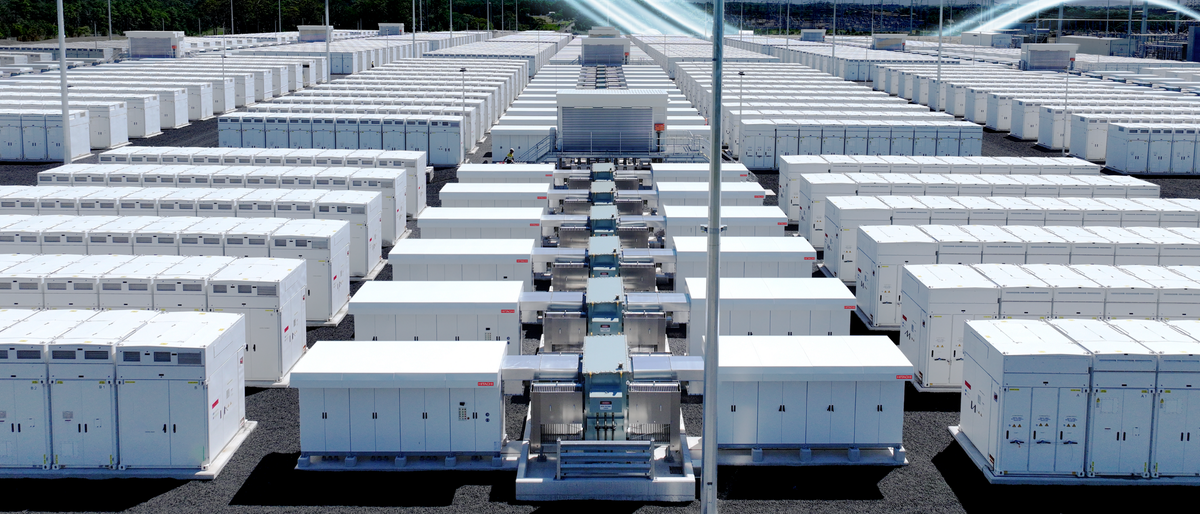
Commissioned and overseen by EnergyCo and the NSW Government and built, owned, and operated by Akaysha Energy, the Waratah Super Battery was created to help maintain reliability as renewable generation increases and ageing coal-fired power stations retire. Now in commercial operation, the battery operates as a strategic grid asset, providing fast-acting support through the System Integrity Protection Scheme (SIPS) to help protect the New South Wales electricity network.
At 850 MW / 1,680 MWh, it is one of the world’s most powerful batteries. But scale was never the project's only ambition. The real vision was to ensure the battery energy storage system (BESS) could actively support the grid during critical moments, responding fast enough to help maintain stability without compromising the transition to a modern, sustainable and secure energy future.
New South Wales is undergoing one of the most significant energy transformations in its history.
With coal-fired generation retiring and renewable energy taking on a larger role in the electricity mix, maintaining reliability becomes more complex. Unlike conventional power stations, renewable resources are often distributed across vast geographies and influenced by changing weather conditions. This creates new challenges for network operators responsible for keeping electricity flowing safely and reliably across the state.
As coal-fired generation is phased out, the grid must replace not only energy production but also the stability services that conventional power stations have traditionally provided. Utility-scale BESS are increasingly being called upon to help fill that role.
The Waratah battery was developed to help maintain secure system operation as the generation mix evolves. Acting as a digital shock absorber, the BESS helps manage disturbances, maintain critical network functions, and create the operating conditions needed for greater integration of renewable energy.
The SIPS sits at the center of that role, enabling the Waratah Super Battery to strengthen and protect the New South Wales electricity network.
Established by the New South Wales Government, developed by Transgrid and overseen by EnergyCo, SIPS is one of Australia's most sophisticated grid protection frameworks. It continuously monitors critical transmission infrastructure and automatically coordinates a response when major disturbances occur on the network. Whether triggered by transmission faults, severe weather events, or sudden changes in power flows, the scheme is designed to help prevent localized issues from escalating into broader system disruptions.
Participation in SIPS demands more than storage capacity. Assets must demonstrate the ability to respond within milliseconds while operating within Australia's stringent grid requirements. With the Waratah Super Battery now in commercial operation, that capability is being put into practice, enabling the battery to rapidly inject or absorb power as needed to safeguard the network.
To enable Akaysha's participation in SIPS, Hitachi Energy supplied 288 Power Conversion Systems (PCS) units and two Power Plant Controllers (PPC), providing the power converters, controls and integration expertise needed to create an integrated control system capable of coordinating battery response in real time. Sitting behind the battery and the SIPS Control System developed by Transgrid are Hitachi Energy's smart controls and software, the digital brains behind the project. Extensive modelling, testing, and integration activities helped validate performance under some of the world's most demanding grid conditions.
Today, Hitachi Energy's digital capabilities extend beyond enabling millisecond response. Through real-time monitoring, diagnostics, and advanced analytics, operators gain continuous visibility into system performance throughout the asset lifecycle. This enables proactive maintenance, optimized dispatch strategies, and faster identification of potential issues before they impact operations. Through a 20-year service agreement, HMAX ™ lifecycle services expertise, Hitachi Energy's digitally-enabled, AI-powered suite of services and solutions designed to safeguard critical energy systems, provides ongoing lifecycle support and long-term operational insight.
Together, these capabilities help maximize asset availability, optimize long-term performance, and provide confidence that the system will continue delivering value throughout its operational life.
By coordinating the battery, power conversion systems, and grid interface as a single integrated solution, Waratah combines advanced technology with the ongoing intelligence and support needed to adapt to changing network requirements over time.

The same conversion and control technologies that enable participation in SIPS also support broader grid services, ancillary services, and energy market participation, enabling operators to adapt to changing network and operating conditions over time. This means the Waratah Super Battery can do more than sit in reserve until it is needed. It can actively support the grid while maximizing the asset’s value throughout its operational life.
In practical terms, this transforms the battery from a single-purpose infrastructure investment into an active grid asset.
Nick Finch, Director of Engineering at Akaysha Energy, said, "Reaching final commercial operations at the Waratah Super Battery is a significant milestone for everyone involved. The partnership between Akaysha Energy and Hitachi Energy has been instrumental in delivering one of Australia's most important energy infrastructure projects. Hitachi Energy's power conversion technology, controls, and technical expertise have helped create the digital backbone that enables Waratah to perform its critical role in enhancing grid reliability while enabling more renewable energy to flow across New South Wales. Together, we've demonstrated what is possible when strong partnerships, advanced technology and a shared commitment to the energy transition come together."
The project's capabilities were not only proven through testing. During a severe heatwave in November 2024, the Waratah Super Battery was called upon to help maintain electricity reliability in New South Wales, providing an early demonstration of the role large-scale battery storage can play during periods of system stress.
Qualifying for SIPS demands more than technical capability. Developers, regulators, and network operators needed confidence that the system would perform when called upon. That confidence was established through rigorous testing, compliance validation, and performance under some of Australia's most demanding grid requirements.
Hitachi Energy's expertise in power conversion solutions, controls, and grid integration helped deliver a solution capable of meeting these requirements while enabling the secure operation of the network.
Technical performance is only part of the equation. Developers, investors, regulators, and network operators also need confidence that projects can perform reliably, scale effectively, and deliver value over the long term. For projects such as Waratah, that confidence helps turn ambitious energy infrastructure into deployable, investable assets.
Command complexity. Power security. In practice, that means helping operators manage increasingly complex energy systems while ensuring critical infrastructure can adapt to evolving grid requirements and continue delivering reliable performance and long-term value.
The significance of the Waratah Super Battery extends beyond a single project. It demonstrates how utility-scale BESS can play an increasingly active role in grid protection while supporting renewable energy integration and system reliability.
As renewable generation continues to expand, projects like Waratah highlight how BESS are evolving beyond storage alone to support network protection, system resilience, and the reliable operation of tomorrow's power system.

Discover Hitachi Energy's Power Conversion portfolio, providing the power converters, controls and integration expertise needed to connect utility-scale battery storage and renewable energy to the grid safely and efficiently.