
Command complexity. Power control. Giving operators confidence with network control software for a faster, more complex grid
Blog Post | 18.08.2026 | 7 min read | Jean-Marc Moulin
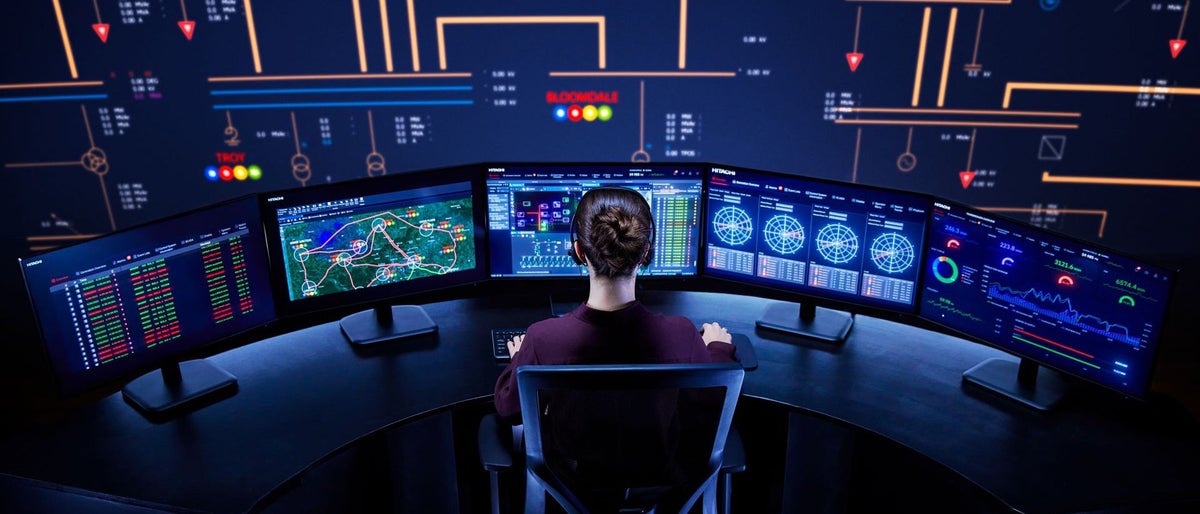
Blog Post | 18.08.2026 | 7 min read | Jean-Marc Moulin
A commuter unplugs an EV before driving to work. A surgeon uses AI to prepare for a complex procedure. A child sleeps by the glow of a nightlight. Each moment depends on the continuous flow of electricity that is available, reliable, and almost invisible.
Behind those everyday expectations, a new operational reality is converging in the control room.
Electricity demand is rising as electrification accelerates, AI adoption expands, and data centers grow. At the same time, power flows are becoming more dynamic. In 2025 alone, the world added a record 800 GW of renewable capacity, and wind and solar overtook fossil fuels as Europe’s largest source of electricity.1
The result is a grid with more variability, more system interdependence, more data that is challenging to contextualize, and less time to make safe, informed operational decisions and action plans to keep the grid stable and resilient. As grid complexity accelerates, utilities need network control software that helps operators turn fast-moving data into confident action.
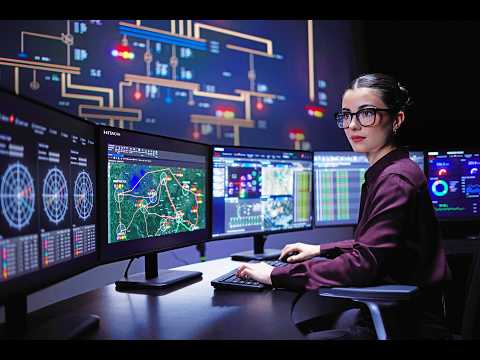
Many network control systems were designed for a simpler power system: centralized, predictable, and largely one-directional. Today, operators must manage distributed energy resources, variable renewable generation, tighter operating margins, and greater coordination across generation, transmission, distribution, and energy markets.
Complexity is no longer a factor affecting grid operations. It is becoming a defining condition of the operating environment. As data increases, along with the pace and complexity of grid operations, system interactions, and operational tempo, utility operators must turn millions of fast-moving signals into trusted decisions quickly enough to protect stability, reliability, and continuity of power flow. That requires speed. Operators need confidence in the data, context, and recommended actions in front of them to keep the system balanced as power flows become more dynamic.
The control room must therefore do more than display information. It must help operators identify which signals matter, understand what the system is telling them, and act before small disturbances become larger impacts.
At Hitachi Energy, we believe the question is no longer whether complexity can be avoided. The question is whether utilities can command it with confidence.
That is the thinking behind our Command complexity. Power control. vision for Network Manager, Hitachi Energy’s mission-critical network control software for generation, transmission, distribution, and electricity markets.
Utilities must modernize without disrupting control
Disruption in the control room means disruption to lives in the community. Full system replacement can take years, introduce operational risk, and threaten the valuable knowledge embedded in existing systems. The stakes for reliability, safety, regulatory compliance, and operational trust are simply too high.
That is why Network Manager is built for safe, incremental evolution. It helps utilities modernize at a pace that preserves continuity, keeps operators firmly in control, and delivers proven capabilities they can rely on. Network Manager gives operators a single environment for accessing the data, workflows, and applications needed to manage the grid.
This approach is not theoretical. It is grounded in delivery and proven in the real world.
At EWEC in Abu Dhabi, Network Manager delivers a State Estimator Quality Index of 98.5%, the highest in the MENA region, providing operators with highly accurate visibility into grid conditions and supporting confident decision-making.
With ELES in Slovenia, Hitachi Energy is co-creating capabilities directly with the utility’s operations team, helping ensure innovation is grounded in real operating needs.
Together, these examples show safe evolution yields meaningful operational gains and better outcomes: proven control strengthened through real-world delivery and close collaboration with customers and partners.
The grid has never been more complex, and the cost of getting it wrong has never been higher,” said Jean-Marc Moulin, Head of Strategy and Portfolio Management - Network Control, Hitachi Energy. “Our approach is simple: evolve alongside our customers and partners, build on proven operations, and introduce new capabilities in ways utilities can trust. That is how we help customers command complexity with confidence while keeping the power they deliver firmly under control.
Hitachi Energy’s vision for Network Manager is built on three pillars: to innovate with customers and partners, power the path toward autonomous operations, and unify data, processes, and applications. Together, these pillars help utilities strengthen resilience, improve flexibility, and manage cost as the energy system evolves.
At the center of this vision is a practical belief: the future of grid operations will be defined not by how advanced the technology becomes, but by whether it can be trusted in real-world operations safely, at scale, and with speed.

That belief is reflected in how Network Manager continues to evolve. Building on a trusted foundation, the latest enhancements extend access beyond the control room and improve interoperability across systems and workflows, helping utilities operate more efficiently in increasingly connected environments.
These enhancements help utilities extend operational visibility, improve collaboration, and make workflows more seamless across the enterprise. They also point to a larger shift: network control software must meet utilities where they are today while preparing them for a more autonomous, data-driven operating model tomorrow.
As the grid becomes more dynamic, AI must be designed for live operations and the people who manage them. Many control rooms rely on operators with deep institutional knowledge and decades of experience interpreting system behavior under pressure. That expertise is not replaceable; it is essential to operational confidence. AI should complement, not replace, it. It can assist operators in identifying what matters sooner, connecting fast-moving data to trusted system context, and making decisions with clearer visibility, better forecasts, improved alarm handling, and stronger outage intelligence. Importantly, human judgment remains firmly in control.
The AI vision for Network Manager begins with a trusted operational picture, what Hitachi Energy calls “network truth”: trusted operational context built from the information operators depend on every day. This includes topology, device states, alarms, events, switching conditions, constraints, forecasts and market signals, intelligent decisions, resilient operations, and supervised autonomy. Integrated into a reliable operating view, this intelligence helps operators understand changing conditions, prioritize the right actions, and move from insight to action faster and more confidently.
For operators, the clearest expression of this vision is Hitachi Energy’s AI assistant for grid operations. This AI assistant brings the concept of network truth into the live operating environment by helping operators see what matters, understand why it matters, and determine what to do next through an explainable, conversational workflow. By connecting telemetry, alarms, events, and calculations in one place, the Hitachi Energy AI assistant is designed to reduce cognitive load, strengthen situational awareness, and support faster, more confident decisions while keeping human oversight and accountability at the center.
Instead of requiring operators to navigate multiple systems and data sources, this AI assistant surfaces the most relevant operational context in one place. That makes complex information easier to interpret and act on.
This is AI applied where it can deliver practical operational value—augmenting human decision-making in real time while keeping operators firmly in control and always in the loop.
The path forward is not a single leap. It is a continuous, carefully governed evolution that helps utilities command complexity today while preparing for a more autonomous grid tomorrow.
The electricity behind a commuter’s EV, a surgeon’s precision, and a child’s nightlight will depend on control systems that evolve safely, incrementally, and in step with the people who operate the grid every day.
Command complexity. Power control. That is the promise behind Network Manager and the foundation for how Hitachi Energy is advancing a more resilient, flexible, and cost-effective energy system. Ready to command complexity with confidence? Discover how Hitachi Energy's Network Manager network control software helps utilities modernize control operations, strengthen resilience, and prepare for the next era of grid management.

