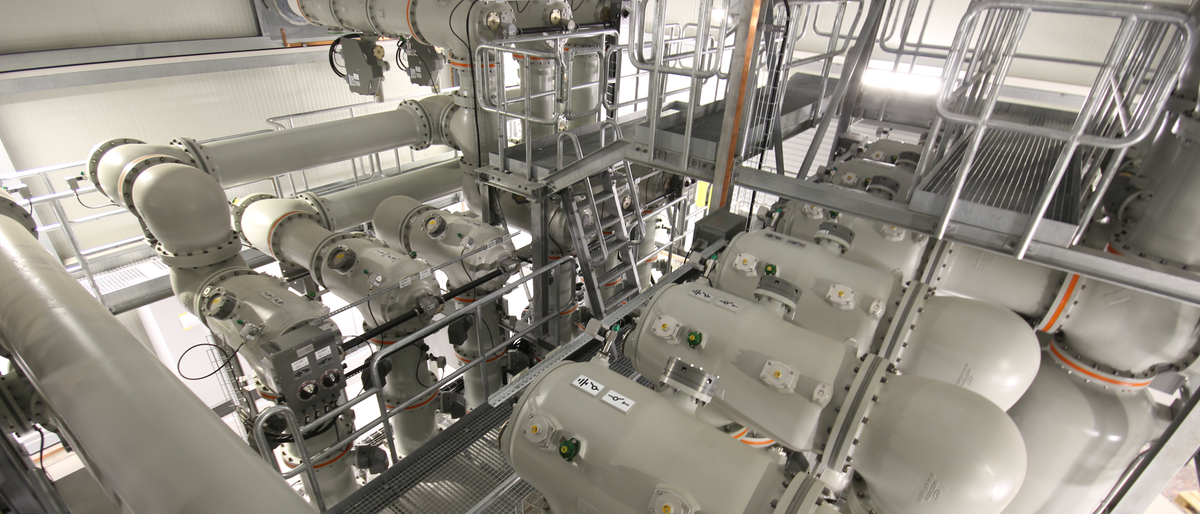
Hitachi Energy and TenneT Germany have successfully completed the final high-voltage site acceptance tests of the world’s first SF6-free 420 kilovolts (kV) gas-insulated switchgear (GIS), once again proving that eco-efficient technology can operate at the very top of the transmission voltage scale without compromising performance or reliability.
When both companies announced this project in 20221 they declared the joint objective to install the world’s first SF₆-free GIS at 420 kV in a transmission network. The successful completion of the site tests marks the transition from production and validation to implementation and operation. It sends a clear signal to the power industry: SF₆ free transmission at the highest voltage levels is no longer a future ambition; it is a technical and operational option for today.
The high-voltage testing was completed at TenneT Germany’s Erzhausen substation near Hanover, Germany, and according to applicable international standards. 420 kV (420,000 volt) lines and associated substations form the backbone of the European transmission grid, enabling the transmission of high-capacity electricity over long distances with minimal losses. Gas-insulated switchgear at this voltage level operates under extreme electrical, thermal, and mechanical stresses. Traditionally, it relies on SF₆, a potent greenhouse gas with a global warming potential (GWP) 24,300 times greater than CO2. By eliminating the use of SF₆, the new EconiQ® GIS drastically reduces its potential environmental impact while remaining as reliable and scalable as the conventional GIS.