
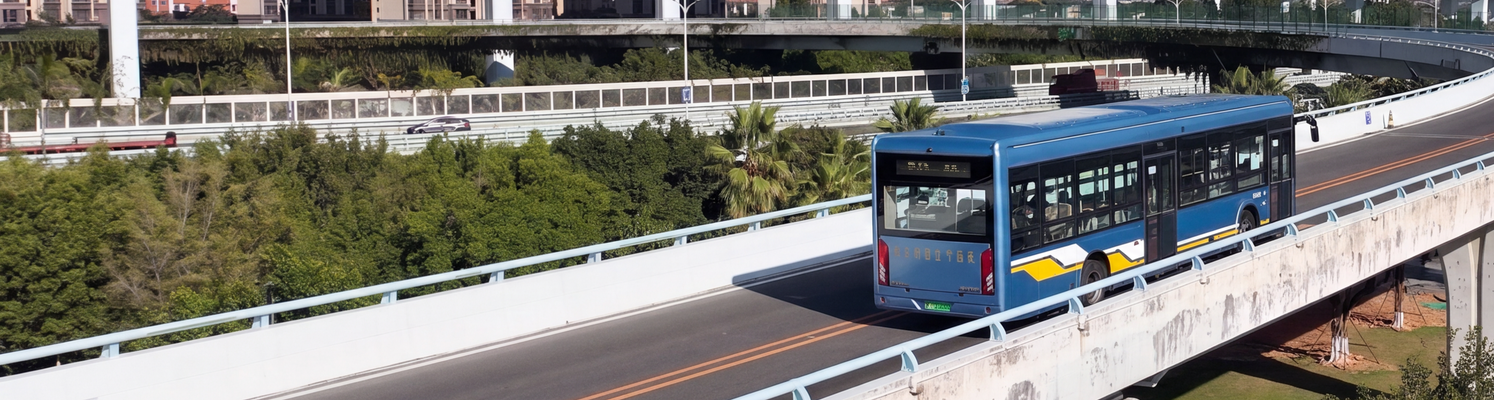
Grid-eMotion® Flash charging solution is a viable approach to urban mass transit. It can eliminate the need for catenary infrastructure and heavy onboard batteries while overcoming range and scheduling limitations.
Hitachi Energy has developed and optimized its flash-charging technology and onboard traction equipment for high-frequency and high-capacity bus routes. By selecting the appropriate technologies and ensuring optimal energy management, the system can save as much as 1,000 tons of CO2 on a bus line covering approximately 600,000 kilometers per year. In addition, the e-bus energy costs are 30 percent below those of a diesel bus.
Previously known as TOSA, this flash-charging technology enables ultra-fast charging at intermediate stops, helping fleet operators optimize costs and vehicle availability.
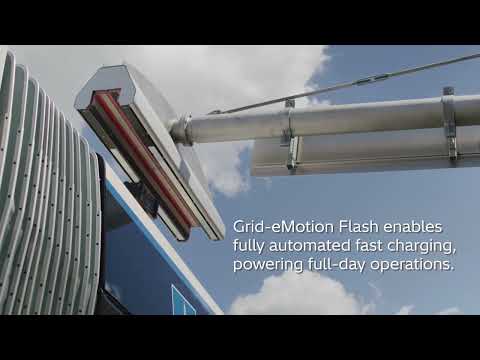
Flash charging stations are equipped with high-power systems capable of delivering 400–600 kW or more, significantly reducing the time required to recharge. This ensures that buses can replenish their batteries during dwell time (few seconds) at intermediate stops or a few minutes at terminals, maintaining operational efficiency. They can be connected to either MV or LV. The infrastructure is compatible with grid compliance and local standards.
LTO batteries are integral to flash charging systems. Known for their capacity to manage high power input and output, these batteries can withstand frequent partial charging cycles without compromising performance. Their robustness and rapid charging capabilities render them suitable for the rigorous demands of urban transit systems.
Advantages of LTO Batteries:
• Wide Operating Temperature Range
• High level of safety
• Long cycle life
• High power density
Key Advantages

Fast, automatic connections with high tolerance.
Minimal battery replacements: no more than one change over 20 years.
The fleet size remains the same as a diesel fleet.
Compact batteries (ranging from 90kWh to 150kWh) allow the buses to carry the same number of passengers as diesel buses.
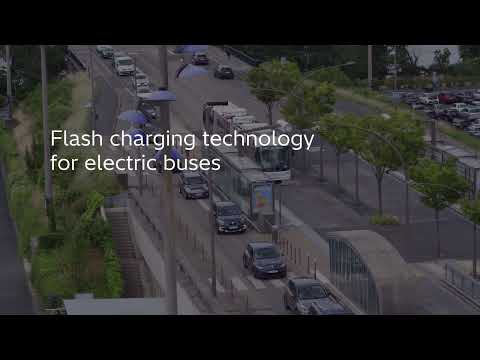
Flash-charging technology is an innovative approach that allows electric buses to recharge their batteries during dwell time without affecting overall operational efficiency.

Customer Success Stories

Download and Links
Frequently Asked Questions
Grid-eMotion® Flash replenishes energy through short and frequent high-power charging events during normal operations. A robotic pantograph connects the vehicle to the charging point while passengers board and leave, which allows charging to become part of the timetable rather than requiring a separate operational break. The complete system is designed around the route, considering the timetable, vehicle requirements, battery capacity, charging locations, and operational conditions together.
While standard opportunity-charging concepts are often used during longer terminal stops, Grid-eMotion® Flash can also charge vehicles during regular route stops. Its robotic pantograph connects and charging begins in less than one second. Short charging events replenish energy while passengers board and leave the vehicle. This integrates charging directly into regular operations, allowing vehicles to carry smaller batteries and more passengers.
No, Grid-eMotion® Flash does not require charging infrastructure at every stop. The preferred arrangement for many routes uses high-power charging stations at the route terminals. A strategically located reserve charging point can also be included to support operations. The final number and location of charging points are determined through route and operational studies.

Something caught your eye?
Our sales team will get in touch with you