
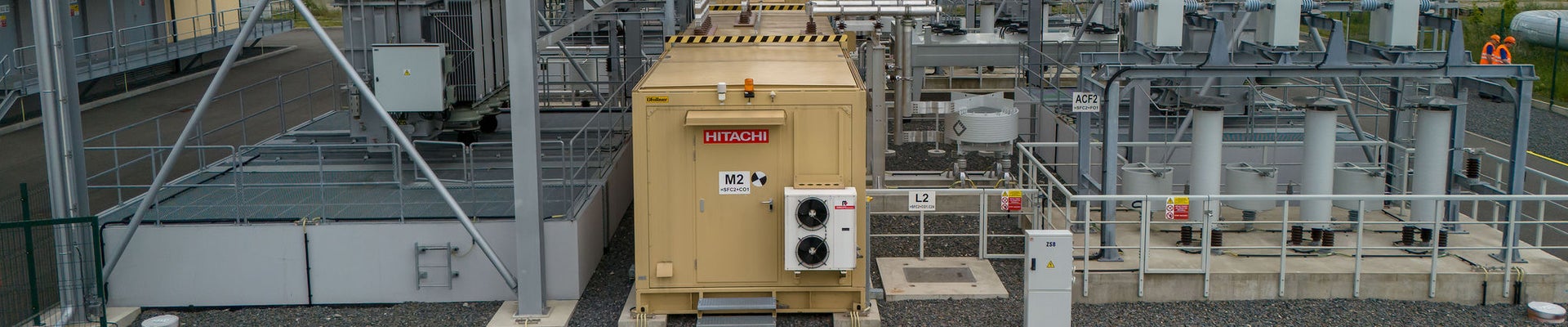
Static frequency converters are applied in many applications involving generation, transmission, distribution, and use of electrical energy. Their inherent capability to control voltage, frequency and power flow brings flexibility and energy efficiency to a new level. Developments in power electronics have reduced their cost and increased their power rating. They contribute to a more sustainable world due to their capability to integrate renewable energy sources, reduction in energy consumption, and enabling environmentally friendly transport systems.
Bringing electric energy to a new level of efficiency and flexibility
over 1 billion
By 2028, over 1 billion passengers will use rail transportation globally
78 GW
Additional pumped storage added by 2030
- 42 %
of GHG emissions committed by countries (2030 vs 2024)

Why?
SFCs bring several advantages needed by our evolving grid:
More sustainable supply
Higher efficiency
Lower Capex and Opex
Better grid compatibility

What?
SFCs are controllable voltage sources. They can:
- De-couple a load from the grid
- Adapt the frequency
- Adapt the voltage
- Control the power flow
- Control the reactive power independently on both sides

How?
Powerful in-house developed semiconductors that provide the desired voltage
Long experience in medium voltage SFC applications with high requirements on availability, efficiency and robustness
Static Frequency Converters support in balancing the energy trilemma

Sustainability
Decarbonization of industries and utilities, integration of renewable energy sources
Security of Supply
SFCs offer power flow control, independent reactive power control, as well as additional functionalities such as virtual inertia, black start or grid forming control. With that, they fulfil even most stringent grid code requirements.
Affordability
SFC systems can be more cost-effective compared to other technologies, especially when looking from a system perspective.
Industry Leader
Hitachi Energy has more than 40 years of experience in high power medium voltage SFCs for various applications, such as Rail power supplies, hydro pumped storage power plants or grid interties
When evaluating the SFC solution on a system level, it can be a complete game-changer, as SFCs in many cases allow to reduce both CAPEX and OPEX costs. This is why their adoption is expanding into new markets, with customers who have tested the concept eager to embrace it again and again

Applications
-
Rail
-
Hydro
-
Grid Intertie solutions
-
Shore-to-ship solutions
Rail Static Frequency Converters
Hitachi Energy’s Static Frequency Converters (SFCs) bring a new level of flexibility to the design of railway electrification systems compared to conventional transformer-based substations. By leveraging advanced power electronics, SFCs help reduce both CAPEX and OPEX, increase maintenance flexibility, ensure grid code compliance, and support sustainability goals through electrification and lower energy demand from the grid.
For more than 40 years, Hitachi Energy has been the reference in static frequency converters (SFC) for railway applications. SFCs ensure grid compatibility of traction power supplies, while optimizing performance of railway corridors.

Customer Success Stories
SFCs in Social Media

FAQs
Frequently Asked Questions
The containerized design enables the delivery of pre-fabricated and pre-tested modules, ensuring minimum time required on site for installation and commissioning and very low risk for project delays.
We have more than 40 years of experience with thelargest installed base in several applications, which makes us an excellent partner ensuring peace of mind for our customers
News

Something caught your eye?
Our sales team will get in touch with you