Everything you need to know about the Digital Factory
Blog Post | 01.07.2026 | 5 min read | Markus Heimbach
Blog Post | 01.07.2026 | 5 min read | Markus Heimbach
High-voltage factories didn’t always look the way they do today. Not long ago, they were demanding, hands-on environments—clipboards on the shop floor, paper trails stacked high, and know-how living mostly in the minds of experienced engineers. Getting answers about quality or performance often meant digging through files or chasing answers from the other side of the planet.
Today, the transformation is well underway. In modern high-voltage manufacturing, digital systems increasingly help teams follow a component’s journey from design to delivery, with data captured and shared throughout the process. Test results, production milestones, and quality checks contribute to a clearer picture of how products are built.
This greater visibility helps teams make faster decisions, identify issues earlier, and maintain consistent quality throughout production.
And this is exactly the vision behind Hitachi Energy’s Digital Factory.
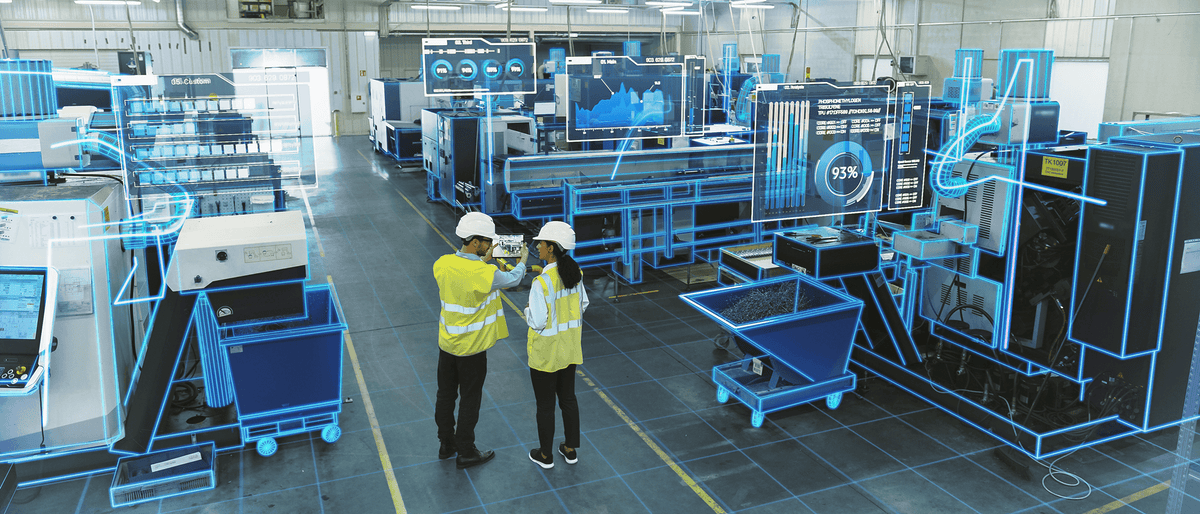
The Digital Factory is a connected ecosystem where people, machines, and data work together as one. Its purpose is simple but powerful: to streamline manufacturing processes while raising quality and traceability across the entire value chain.
Think of the Digital Factory as a human brain. It receives information, processes it in real time, and sends signals so every part of the system works in sync. In the same way, the Digital Factory connects systems, equipment, and teams, so actions on the shop floor are captured and traced more consistently.

The Digital Factory is built on three core IT pillars within the High Voltage Products business, each platform contributing a critical layer of information and functionality across different stages of a high-voltage product’s lifecycle:
When fully integrated at a manufacturing site, these systems help enable the key capabilities of a Digital Factory, such as:
Together, these capabilities transform how our factories operate. And at the heart of this network lies a cloud-based system built entirely in-house: the Digital Passport System.
The Digital Passport System or DPS is a shop-floor tool used by operators to trace a product’s complete lifecycle. Through a unique matrix code assigned to each critical component of a product, important quality information becomes available in seconds.

Producing high-voltage equipment is a complex process. Each product passes through multiple assemblies, tests, and hands before it is ready for long-distance transmission of electricity. With these layers of processes spread across external suppliers, feeder factories, and operating units worldwide, traceability becomes difficult. The High Voltage Products team saw an opportunity to rethink how product data flows through factories.
What began as a vision from a small group of quality and IT experts took shape around 2022. The goal was to create a single, reliable source of truth that is accessible anytime, anywhere, by anyone in the business who needed it. Development of the tool began in-house in Spain and years later, the platform continued to evolve into the DPS used today.
DPS gives every product a true digital passport. One that records the suppliers of the components, how it was assembled, where it was tested, and more. Just as a passport allows people to move confidently across borders, DPS allows products to move seamlessly across factories, teams, and lifecycle stages.
DPS is powerful on its own, but its true value emerges when it operates as part of the Digital Factory. It is a vital enabler of building products that are traceable, trusted, and built to last.
Today, this integration is already taking shape. With the Digital Factory live in Dammam, the first High Voltage Products site to fully transition, crucial documentation is now accessible across our global network of factories and suppliers through DPS. This milestone marks an important shift: the gradual decommissioning of traditional Manufacturing Execution Systems (MES). As the Digital Factory matures, the fragmented tools across sites are replaced, enabling consistency, scalability, and clarity across the entire value chain.
This approach also puts us ahead of the curve. As regulations such as the European Union’s Digital Passport requirements begin to shape the future of manufacturing, the level of transparency required is already a reality for the High Voltage Products business. The Digital Factory and DPS were not created because policies demanded it, but because quality has always been part of our DNA.
The impact extends beyond manufacturing efficiency. Data generated on the factory floor is structured and unified through One Installed Base (OneIB), the company’s platform for tracking installed equipment. These insights are ultimately leveraged by Hitachi Energy’s HMAX™️ solutions, wherein the same data that improves manufacturing excellence is fed into lifecycle services, enabling better maintenance, management, and performance strategies.
Behind every digital system, every factory transformation, every innovation are people who design, build, maintain, and operate these technologies. The Digital Factory was built to support them by making information more accessible and consistent. When an engineer inspects a component years later, they can immediately access its full history, where it was manufactured and the tests it underwent as well as the results.
This level of transparency strengthens more than manufacturing performance. It improves how teams work with data and how quality in high-voltage products is sustained over time.
Ultimately, these capabilities are what make the Digital Factory more than a system. It’s a connected way of working that strengthens the reliability and safety of the grid we all depend on.