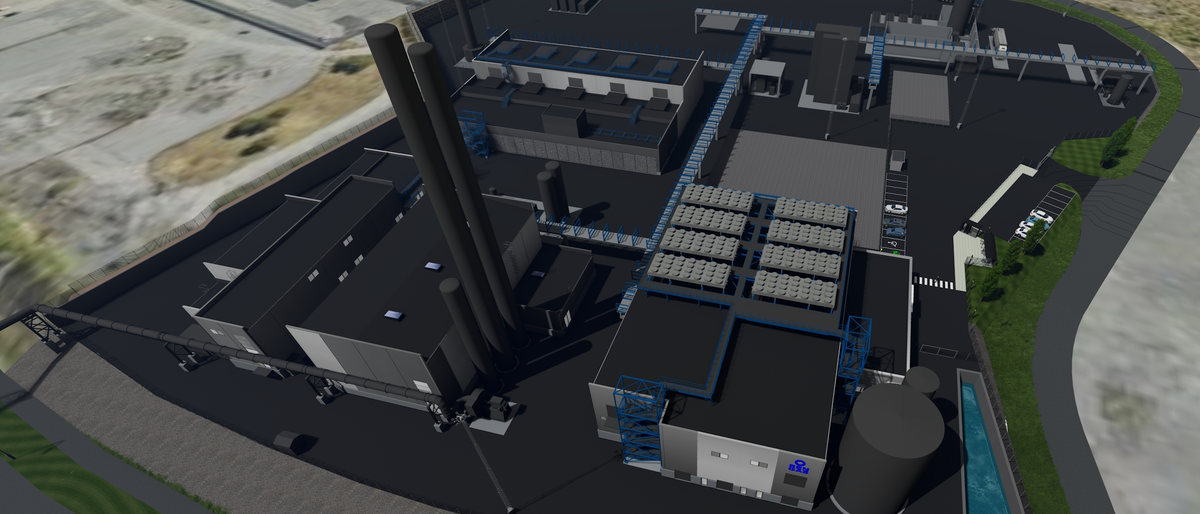
Hitachi Energy has signed an agreement with Nordic Ren-Gas to deliver an integrated electrification solution to support its synthetic e-methane production plant (Power-to-Gas) in Tampere, Finland. Based on a systems approach, the project combines eco-efficient grid connection and power quality technologies to support the reliable operation of the facility, including the deployment of a 145-kilovolt (kV), SF₆-free, EconiQ®1 gas-insulated switchgear (GIS) and power and distribution transformers.
The European market for renewable synthetic fuels is entering a new phase of growth driven by the EU's Renewable Fuels of Non-Biological Origin (RFNBO) regulation. As part of this framework, fuel suppliers across all EU Member States must gradually incorporate renewable, hydrogen-based synthetic fuels into their fuel mix, creating long-term demand for e-methane and other Power-to-X fuels. The Tampere facility addresses this growing market need by producing renewable e-methane for heavy-duty transport and supporting Europe's decarbonization targets for the transport sector.
High-voltage switchgear is a critical component of the power grid, and its importance is even more pronounced as the energy transition advances. Traditionally, high-voltage switchgear has relied heavily on SF₆, the most potent greenhouse gas known, with a Global Warming Potential of 24,300 times that of an equivalent amount of CO2. By eliminating SF₆ emissions, Hitachi Energy’s EconiQ technology reinforces Nordic Ren-Gas’ commitment to minimizing its environmental impact and advancing a more sustainable grid. Its compact design is ideally suited for urban environments while minimizing both lifecycle costs and carbon footprint.2
Nordic Ren-Gas’ synthetic e-methane production plant in Tampere will produce renewable synthetic e-methane and district heating, with green hydrogen serving as an intermediate input in the production process. The production plant will form part of the production and distribution chain for clean Power-to-X (P2X) fuels for transport, supporting the transition to low-carbon transport. The plant will annually produce enough renewable e-methane to fuel, for example, approximately 500 heavy-duty trucks and carbon-free district heating sufficient to cover the annual heat consumption of 35,000 two-room apartments. As a result, fossil fuel use and carbon dioxide emissions will be significantly reduced.